Senderos del Rocío
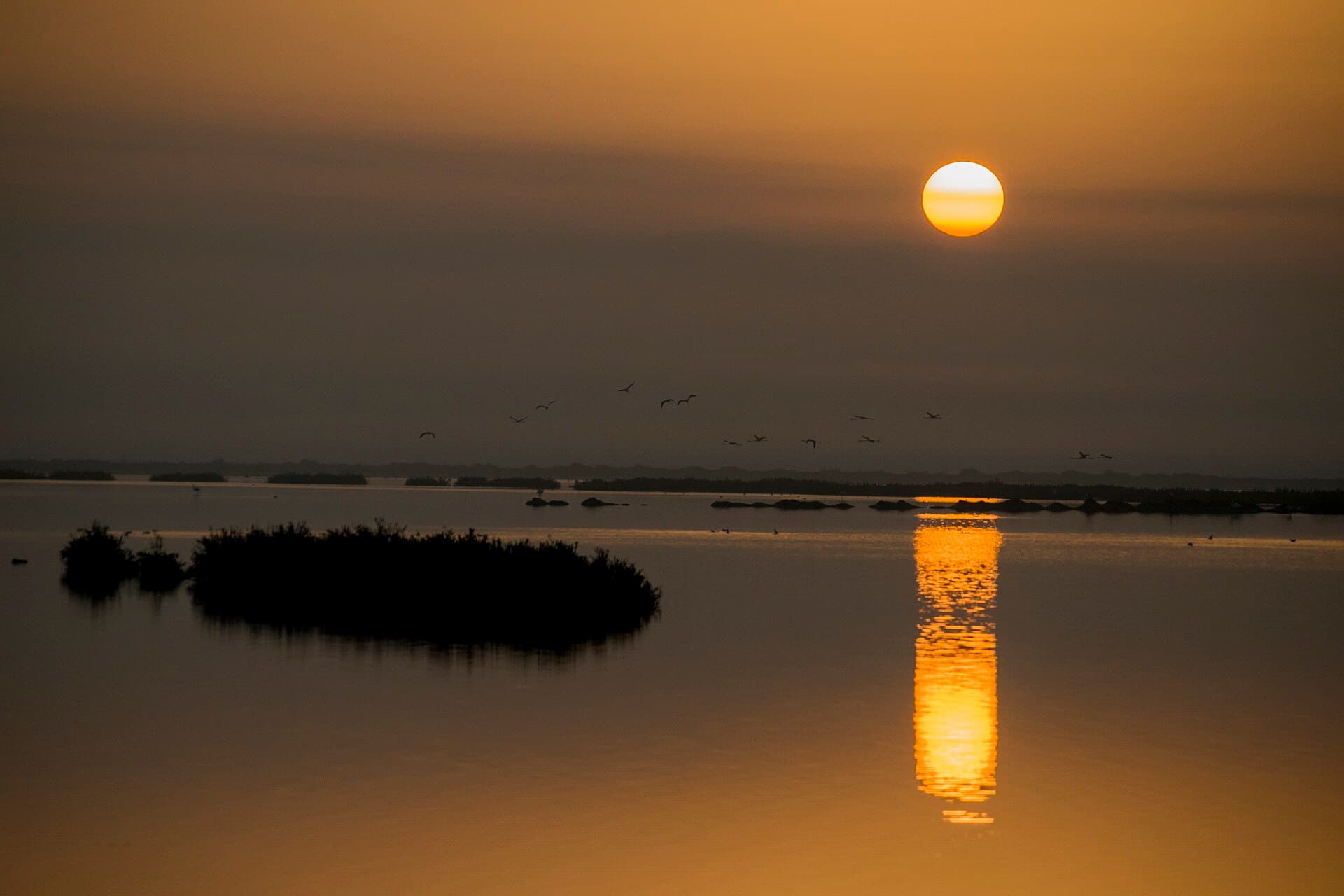
Sunrise over the Doñana marshes
© Agustín de Sanluca · CC BY-SA 3.0 ES

Camino del Ajolí

Camino de Sevilla

The most crowded route, featuring the legendary Vado del Quema and the Raya Real cutting through the heart of Doñana.

Distance
60–110 km
Days
3–4
Difficulty
Hard
Terrain
Farmland, pine woods and the sandy tracks of Doñana

Access conditions

How, when and with what permits this way can be travelled throughout the year.

ModeStatus
On footAll year round
BicycleCheck conditions
On horsebackAll year round
VehicleRequires authorisation on the Doñana sections
CampingOnly in authorised areas
Fire riskSummer restrictions (INFOCA)

How to read the statuses

  • No restriction
  • !Conditions or permit apply (see each row)
  • Not allowed

The interior of the Parque Nacional de Doñana can only be travelled during the pilgrimage with the brotherhood or on authorised guided visits. Outside those cases, keep to the public tracks and waymarked trails.

Permits and regulations

Protected areas it crosses
Espacio Natural de Doñana (Parque Natural)Parque Nacional de Doñana
Competent authority
Junta de Andalucía (Consejería de Sostenibilidad y Medio Ambiente). Doñana is both a National Park and a Nature Park, a Biosphere Reserve and a UNESCO World Heritage Site.
Seasonal restriction
High fire-risk season (INFOCA Plan), usually from 1 June to 15 October: take extreme care with fire and bear in mind possible access restrictions.

Elevation profile

Ascent

+217 m

Descent

225 m

-6471000 km18 km35 km53 km70 km

This is the busiest and most publicised route: more than 60% of the Rocío brotherhoods make their pilgrimage along the Camino de Sevilla or its variants. Setting out from the city and from numerous Sevillian towns, it crosses the Aljarafe and the pine forest of Aznalcázar before entering the sandy tracks of inner Doñana along the Raya Real, a broad drovers' road of white sand.

Its most emblematic landmark is the Vado del Quema, the crossing of the Guadiamar river, where the "rociero baptism" is celebrated for those crossing it for the first time — a tradition declared a Festival of Tourist Interest of Andalusia. After days of up to 20 km and an overnight stop at the Palacio del Rey, all the variants converge at the Puente del Ajolí, "the gateway to heaven", before entering the village.

Who walks it

Triana, El Salvador, San Bernardo, la Macarena, Villamanrique and most of the Sevillian brotherhoods.

Day by day

The stages of the way

A representative division: each brotherhood sets its own schedule and rest stops, which vary each year depending on Doñana.

  1. 01 km

    Triana · Aljarafe

    Sevilla → Torrequemada

    The day of farewell: Triana pours into the streets as the Simpecado passes by, and the asphalt is soon left behind for the olive groves of the Aljarafe. The pilgrims' Mass at the Hacienda de Torrequemada marks the first taste of life on the road.

    Access

    On foot: All year roundBicycle: Check conditionsOn horseback: All year roundVehicle: Requires authorisation on the Doñana sectionsCamping: Only in authorised areasFire risk: Summer restrictions (INFOCA)
  2. 02 km

    Pine woods · La Juliana

    Torrequemada → Vado del Quema

    A day of pine forest and scrubland, with a stop before the Almohad hermitage of Cuatrovitas among the pines. The day ends beside the Vado del Quema, where dozens of brotherhoods camp to cross together at dawn.

    Access

    On foot: All year roundBicycle: Check conditionsOn horseback: All year roundVehicle: Requires authorisation on the Doñana sectionsCamping: Only in authorised areasFire risk: Summer restrictions (INFOCA)
  3. 03 km

    Guadiamar · Cañada Real

    Vado del Quema → Villamanrique

    The most iconic moment of the route: the wagons crossing the bed of the Guadiamar and the "baptism" of those crossing it for the first time. In Villamanrique, the host brotherhood welcomes each confraternity at the doors of its parish church.

    Access

    On foot: All year roundBicycle: Check conditionsOn horseback: All year roundVehicle: Requires authorisation on the Doñana sectionsCamping: Only in authorised areasFire risk: Summer restrictions (INFOCA)
  4. 04 km

    Marshland · Raya Real

    Villamanrique → Palacio del Rey

    The pine forest vanishes and the pilgrims enter the open marshland of the former Royal Hunting Ground, with long horizons and intense light. The rest stop at the Palacio del Rey, an old hunting lodge, precedes the night's bivouac beside the Puente del Ajolí.

    Access

    On foot: All year roundBicycle: Check conditionsOn horseback: All year roundVehicle: Requires authorisation on the Doñana sectionsCamping: Only in authorised areasFire risk: Summer restrictions (INFOCA)

    Section through the interior of Doñana: travelled on foot or on horseback with the brotherhood; access by vehicle requires authorisation.

  5. 05 km

    Entrance via the Ajolí

    Puente del Ajolí → El Rocío

    The day of arrival, the most eagerly awaited. The Puente del Ajolí — "the gateway to heaven" — is crossed amid tinkling bells and cheers to the Blanca Paloma, and the brotherhood enters the village in formation to present itself before the Virgin.

    Access

    On foot: All year roundBicycle: Check conditionsOn horseback: All year roundVehicle: Requires authorisation on the Doñana sectionsCamping: Only in authorised areasFire risk: Summer restrictions (INFOCA)

The route

The way on the map

An indicative route through its main landmarks. The ochre markers show towns with accommodation: tap to see hotels in the area.

LegendEl Rocío (destination)AccommodationDrinking waterBar / restaurant

Use two fingers to move the map; Ctrl + scroll to zoom. · Points from OpenStreetMap; check opening times and availability on site.

Download & offline navigation

Download the GPX track and open it in your hiking app (OsmAnd, Wikiloc, Locus…) to navigate without signal.

Download GPX

Where to sleep

Accommodation on each stage

Prices and availability for the pilgrimage · Pentecost, 16 de mayo de 2027

Affiliate links: booking through them costs you no more and helps keep this guide running.

Practical information

Getting there and back

Starting point
Sevilla
Parking
Leave your vehicle in the town you set off from or in the village of El Rocío; the interior of Doñana has no open vehicle access.
Public transport
Public transport in the province of Huelva and the connection to El Rocío are operated by Grupo Damas. Check up-to-date routes and timetables before you travel. Buses (Grupo Damas)

All the ways end in the village of El Rocío (Almonte). As these are linear routes, arrange your return to the starting point before you set off: support vehicle, pick-up or bus.

Safety and emergencies

Useful numbers

  • 112Emergencies (general)
  • 061Medical emergencies (Andalusia)
  • 062Guardia Civil / SEPRONA (natural environment)

Recommendations

  • Walk early in the morning and late in the day, and avoid midday. Carry plenty of water, sun protection and a hat: in May the heat and the sand make the going much harder.
  • Mobile coverage is limited in the interior of Doñana. Download the GPX track to navigate offline and let someone know your route and timings.
  • During the fire-risk season (INFOCA Plan, from June to October) take extreme care with fire; in any emergency, call 112.

Frequently asked questions about access

Can the Camino del Rocío be walked outside the pilgrimage, even in winter?+

Yes. The ways run along drovers' roads and public tracks that are open all year round. Outside the pilgrimage they can be travelled on foot, on horseback and, on several sections, by bicycle. The best time is from October to May, as summer is very hot.

Do I need a permit to walk through Doñana?+

No permit is needed to walk along the public tracks and waymarked trails. Only the interior of the National Park, away from those tracks, requires access on an authorised guided visit; the pilgrimage with the brotherhood is the traditional exception.

Can it be travelled by bicycle or on horseback?+

On horseback, yes, on all the ways. By bicycle, along the public tracks and paths; on the sections that cross strictly protected areas it is best to check the conditions before setting off.

Is camping allowed along the way?+

Wild camping is not permitted in Doñana. You may only stay overnight in authorised areas and campsites, and, during the pilgrimage, in the places set aside by each brotherhood.

Other ways

See all
Download GPXBook